
Do Look Up
With everything you've got

This essay has been marinating since September. I had it set to publish on Friday, but as it turns out, today is just the right day to release it (you’ll see why in the fourth paragraph). And so it is. No coincidences in life I suppose.
Before we get into it, I’d like to wish you all a blessed holiday, whatever faith and cultural tradition you may follow. Hold your loved ones close.
It was a Saturday morning late this past September. My daughter and I were cooking up breakfast in the kitchen, chatting about the cancellation of Jimmy Kimmel’s late night show, the raging online debates about Charlie Kirk’s assassination, and a few other anxiety-inducing headlines. We both felt modern life was becoming increasingly splintered and cognitively dissonant. At one point my daughter stopped mid-egg whip.
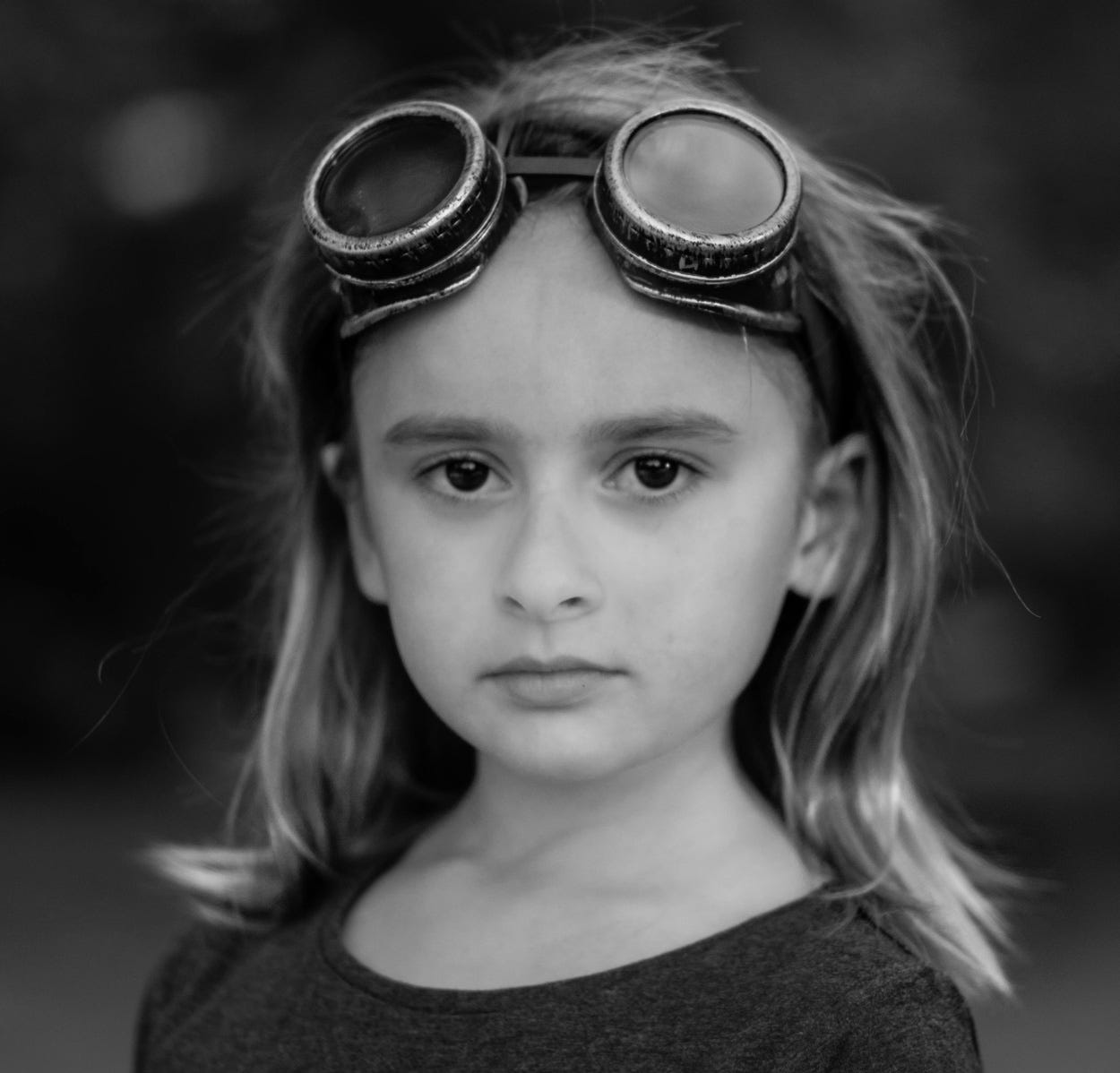
“We shouldn’t be looking left or right,” she said. “We should be looking up. At the billionaires hoarding money. It’s a distraction while they make more and more money.”
My daughter’s fifteen.
You might have seen this somewhere before, this reference to directional gazing, to intentional vision. Perhaps in the film by director Adam McKay, released four years ago today, where a planet-killer comet heads straight toward Earth, and the two scientists who discover it are more shocked by the fact that no one seems to care than by the existence of the comet itself. Of course, when empires begin to decay, they’re mesmerized by their own radioactivity, their Alphas operating in highly altered states and their Betas spinning circles around their own nuclei.
As in cinema, so in life.
Do look up…
…from your screens. Oh the screen, the screen, the cursed magnificent screen! Square, rectangular, so large it hangs on your wall, so small it fits in your hand, so ubiquitous in all of its aluminosilicate glory you have it in every room in your house and maybe the garage too. How many of you have I seen crossing streets, standing at crosswalks, walking through parking lots, smartphone in hand, and me in an EV so quiet they had to pass laws to produce auditory signals to alert pedestrians accustomed to those loud look-at-me motors powered by hydrocarbonized plants and layers of ancient plankton. Thank me because I’m driving and have neither time nor the law on my smartphone’s side. Thank me because I see you. But no, do not look up for the mere raw physics of your safety—for a driver distracted is a pedestrian redacted—look up for oh so much more than you ever thought relevant:
Look up for your self-awareness, in all of its situational colors. You’re here but you’re there, online, in-device, everywhere but here and now, present not present. Telephone poles and mailboxes practice their own inanimate form of stoicism, standing unmoved by your impending proximity.
Look up for your posture, because you are a biological being, a bipedal primate in the mammalian class. Walking while scrolling shortens your gait, slows your pace, corrupts your cadence, and pulls your head and shoulders forward into that gloriously termed position chiropractors call “text neck.”
Look up for your lungs, those critical organs you’ve taken for granted forever that suck in a few red balloons’ worth of this extraordinary invisible untouchable flavorless thing enveloping our entire planet. Six liters of air to be precise, compressed by your phone posture. Give your body some TLC!1
Look up for your eyes, dehydrated by hours upon non blinking hours, ciliary muscles caught in an interminable spasm because you won’t let go of the screen. Look up, to a horizon far, far away.
Look up for your clarity of mind and vitality of heart, for there is nothing like the great wide open space of the real world. Cut the cord of electrons tethering you to the Matrix, step outside and feel the here and now in time and space. A walk after a meal, a lunch with friends, a swim in a forest’s aerial ocean of phytoncides and terpenes,2 a film in a theatre full of strangers instead of that damned isolating smartphone screen…
Do look up…
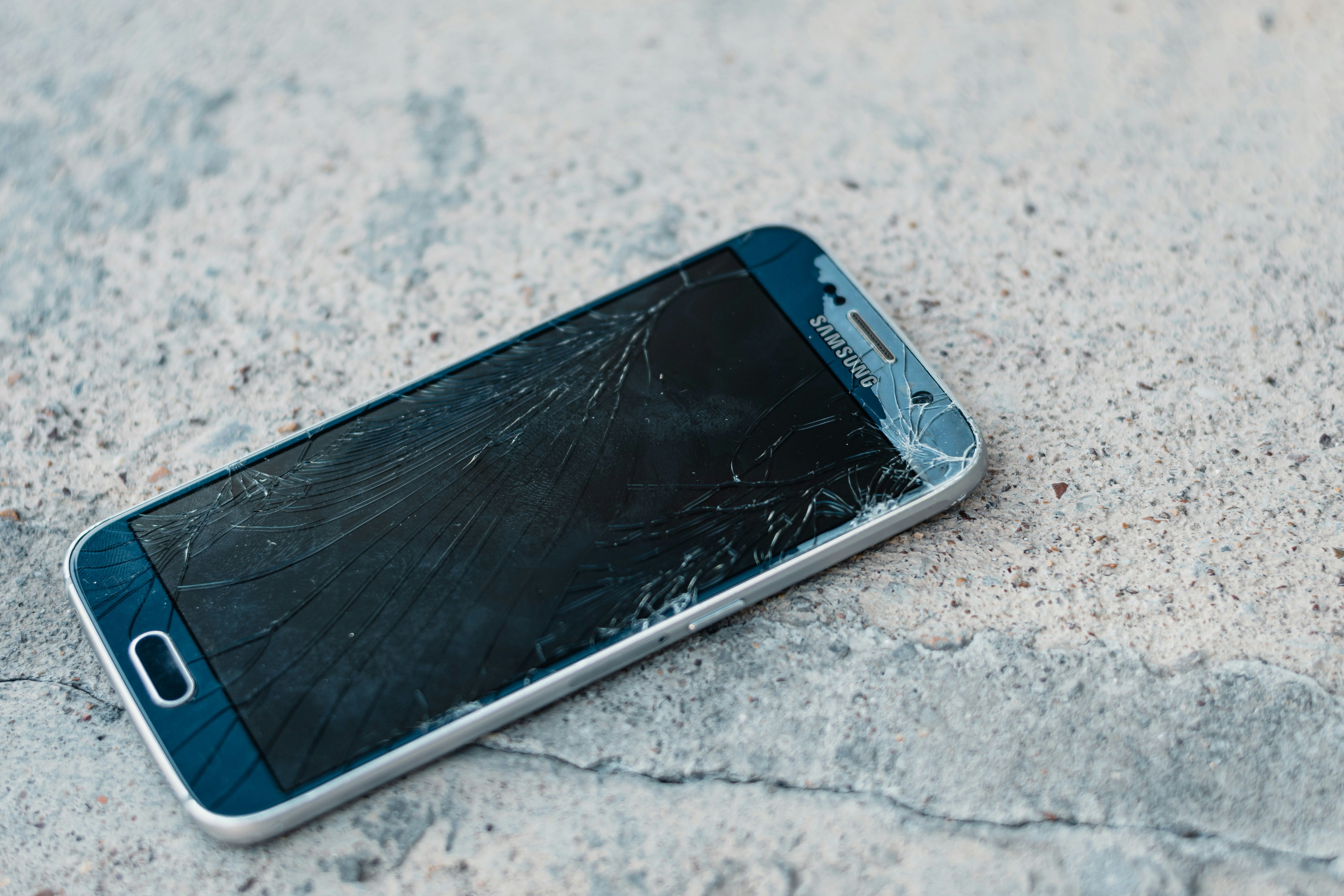
… at your windshield when you’re driving on a country road, when you’re on that road trip you’ve been planning for months. Enjoy the wide open skies, the endless horizon, the winding roads… and your windshield crystal clear from your house all the way to the forest, farm, coast, or mountains. Anything missing? Why, nothing, you say. My car might need a wash but my windshield’s clear. You see that’s just it, your windshield shouldn’t ever be clear when you drive through the countryside, the mountains, the forests, even in the suburbs. It should be marked by the splattered bodies of scores of insects, mayflies and mosquitoes and moths and beetles and all sorts of other creepy crawly fluttering things.
You might think, well that’s a perfectly horrific thing to say… “splattered bodies of scores of insects.” Isn’t it a good thing our cars no longer kill so many pollinators?
Wrong question.
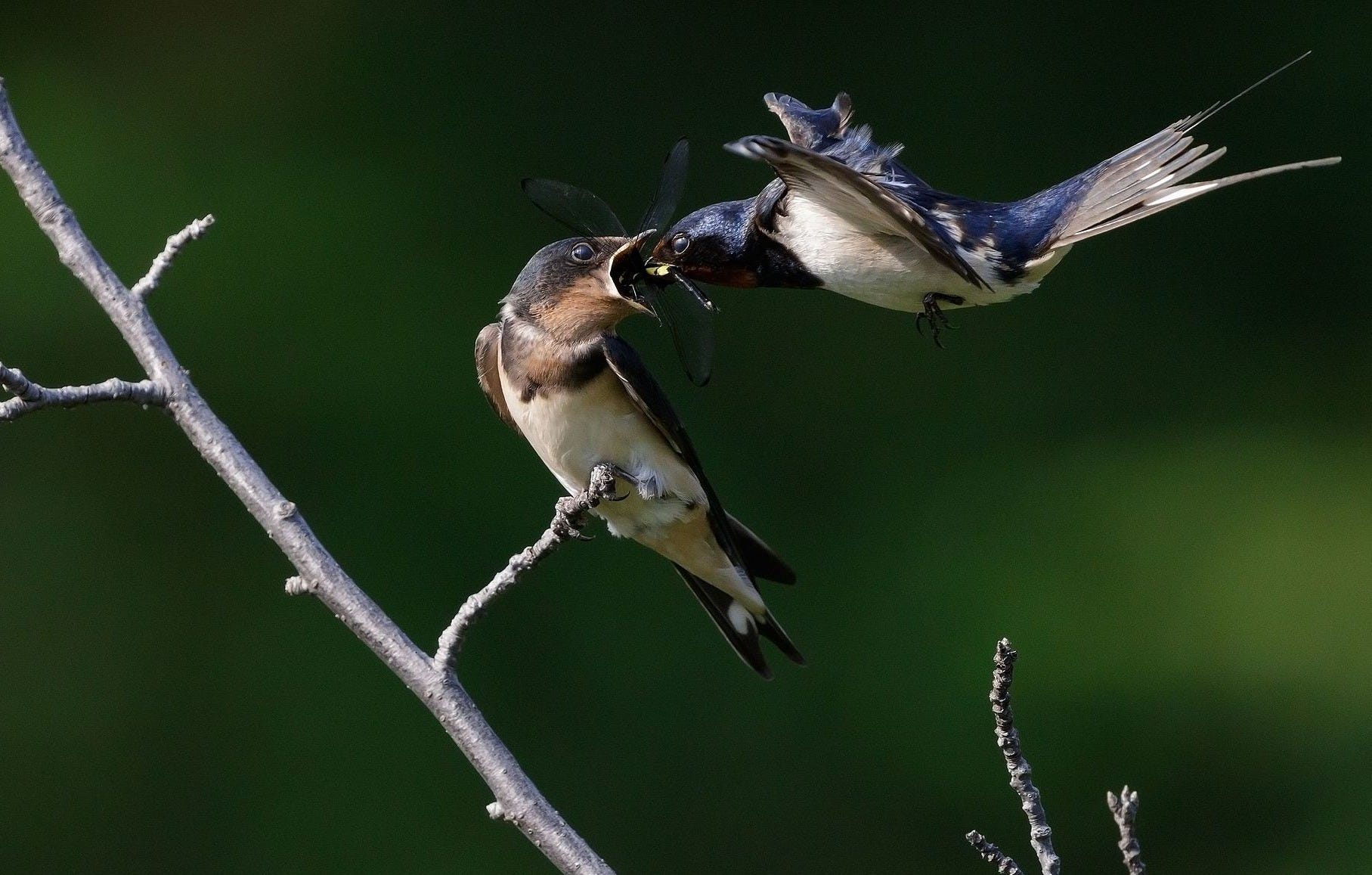
Your driving pleasure is inversely correlated not only with the population levels of local pollinators, but also with the ability of avian parents to feed their young: the nestlings of the lovely Hirundo rustica, known to us mortals as the beautiful little barn swallow.3 Untold scores of human beings toiling under the direction of corporate profits have been poisoning our fields, gardens, and lands with pesticides and fertilizers lethal to plant and pollinator alike, altering their native habitat, and the evidence is nowhere to be seen. Here, the absence of expected evidence is evidence of absence. The insects are absent, and their absence is evidence of something killing them before the windshield does.
Imagine someone poisoning the drivers of the delivery trucks as they make their way from the fields and bakeries and slaughterhouses to your local grocery store. The trucks never arrive, and you have no food for your children.
Whether or not we’re aware of, or bother to think about, the reasons for the absence of insects striking our windshields, does not make the impact of this reality on our ecosystems any less critical. By the time we connect the splattered dots, we might have more intimately critical things to worry about than bug-smeared windshields.
Do look up…
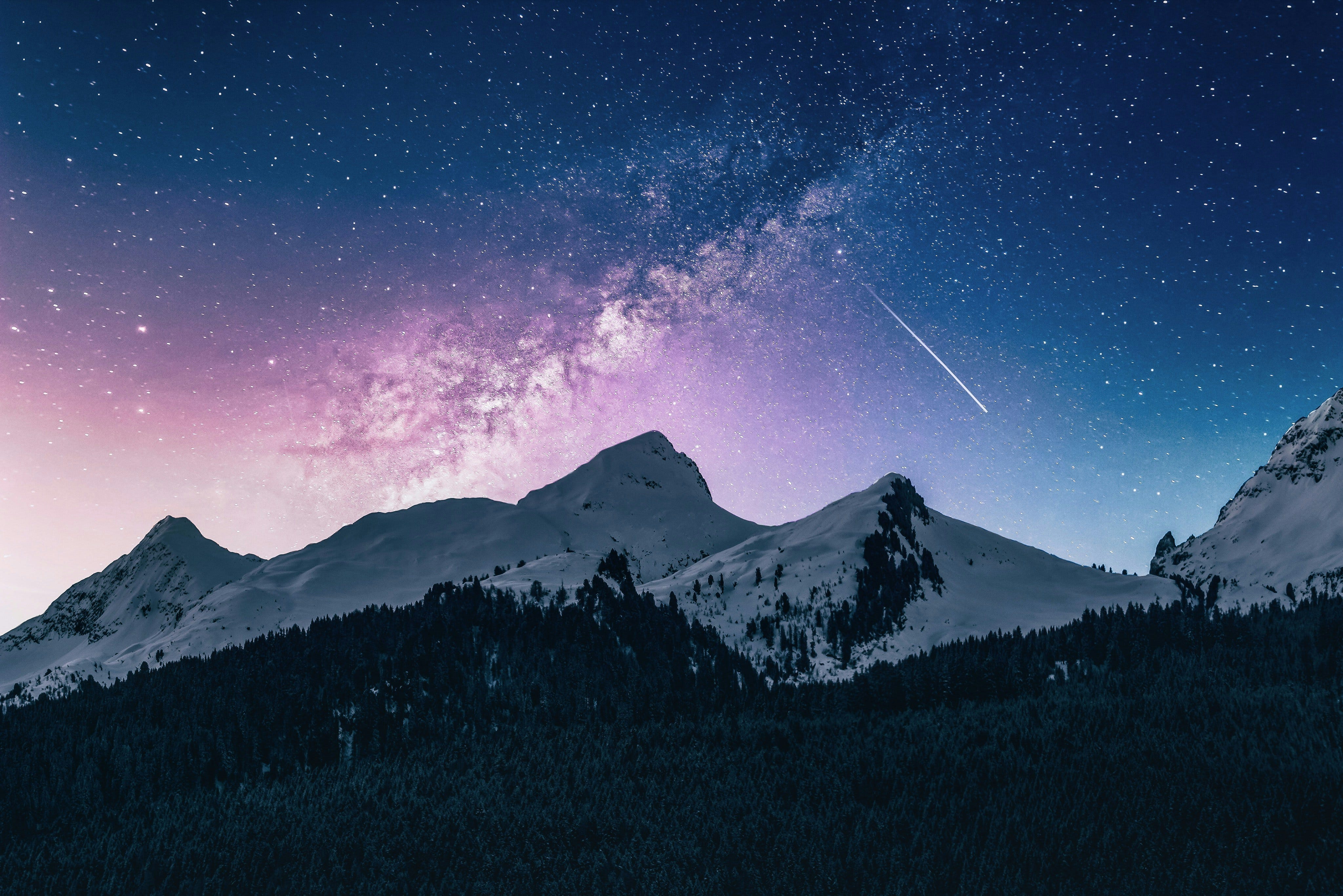
…at the night sky in the city and you’ll see a dull, muddy darkness punctured by the pinpoint glow of electric light. The moon no longer winks at us; the stars are snuffed out; and the Milky Way, that visual orchestra in the sky, is curtained off. We now have our own light show: city lights trace twinkling tapestries across landscapes, connected to each other by thin strands of headlights, as we sit in our houses, dance in nightclubs, or spend time in restaurants, movie theaters, concert halls, casinos, and other public places—all illuminated by lights we humans made.
Oh, glorious, glorious light! Brought forth from the darkness after all these millennia, we are no longer slaves to the sun. But are we truly free? We are now slaves to the electric torch. We are, in truth, like moths, mesmerized by these glowing glass orbs, panels, and strings, incandescent, fluorescent, neon, vapor, LED.
We’re altering our own biochemical and circadian rhythms, from sleep and energy levels to digestion and our hormonal cycles, staying up way too late, working, watching, scrolling. We’re exhausted and we’re addicted, to the screen and to the artificial sun we’ve made. We’ve lost the night, which brings a quiet and a stillness that all living things need to rest, restore, and refresh. We don’t look up at the stars anymore. Globally, 83% of us live beneath light-polluted skies, and an entire one third of humanity is unable to see the Milky Way at night.4
But it’s not just us we’re impacting… it’s entire ecosystems. Our artificial light disrupts ancient cycles and rhythms of sleep, reproduction, and migration. Corals track their mass spawning with the light of the Moon. Monarch butterflies navigate by the position of the sun and their internal circadian rhythms. Birds and baby turtles look to the light of the Moon and the stars to orient themselves, the former for migratory flight and the latter to find their way out to sea in the darkness of night.5
No need to revert to the pre-electric era of… well, literally all of human history prior to the mid-1800’s. Plenty of ways we can tone down the impact of direct and ambient artificial light, in our neighborhoods, cultural, commercial and corporate spaces—do we really need entire office buildings lit up all night long? We are an inquisitive and insatiably curious species, and have all the technology and know-how we need to maintain reasonable visibility at night without its attendant harms. And if you’re very very curious, yes, of course there’s a movement to bring back the night. It’s called, naturally, the Dark Sky Movement, and its mission is to protect every human’s right to a beautiful dark sky.
Do look up…
…to see who’s really pulling the strings. Who is distracting you, calling your attention, pinging you calling you emailing you, popping up ads and sign-up forms, dangling shiny digital necklaces at you, overloading all your senses, streaming at you 24x7.
Who’s drafting the strategy, crunching the numbers, setting corporate policy, authorizing marketing tactics, breaking laws, engaging in creative bookkeeping, hiding records, running backdoor deals, settling lawsuits without trial?
Look up there, at that golden ivory tower shimmering in the sun of an eternal marketplace. How tall, how smooth, how perfectly aligned. Its sides slick with the sweat equity of all your peers, marble sourced from the rarest veins on Earth, access gated, vetted, and fully protected. You can’t climb it, you’ll slide right off without close connections to the people holding hands at the top. You can’t scale it without the passcodes to the insider markets. And you can’t knock it down with your little cardboard protest signs, how laughable.
It’s the oldest playbook of modern Western civilization. Dominance through distraction and lack of knowledge. Power through fear and uncertainty. Control through isolation and division.
Ironically, it is the very same platforms and forms of communication that initially promised new freedoms and connections, that were subsequently weaponized by their corporate owners to use our own data against our better interests and well-being, that we are now learning how to re-weaponize against the same corporate owners. Witness one of countless comments strewn all over the Internet, in broad daylight for anyone with eyes to see:
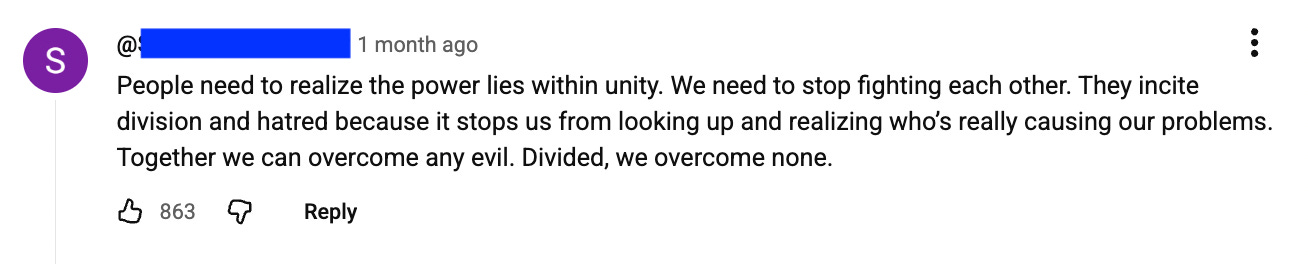
Despite the ongoing onslaught of slop content, clickbait headlines, and the insufferable stack I wrote about last month, people everywhere are awakening, and looking up. Artificial intelligence might be on all the freeway billboards here in Silicon Valley, but natural intelligence is on the rise and it’s coming in with the vengeance of a tsunami. You can feel the tremors, in between the ice-cracked windshields and the crackling neon lights of buzzy headlines. If you’ve read this far, you’re one of the epicenters.
To have true freedom is to have the time and space to think. This is, in fact, where the real power of money lies. Not for luxury things, not for houses yachts private planes and fancy vacations. To have the time to think, which leads to insight, which leads to decision, which leads to action. After all, this is what those pulling the strings at the top of the tower have been doing all along, though with a purpose and intention rather dissimilar to those of us simpler people… people like you and me, who seek a life of joy and fulfillment, a life of discovery and learning, a life of friendship, love, and community, a life of just enough.
And yeah we’ve had just about enough.
Thought is powerful, especially when it’s done dispassionately, critically, and with a strong moral and ethical compass oriented toward community, health, balance.
Maintain your vision, your dreams, your horizon. Let no one poison it, corrupt it, steal it or destroy it. Don’t give up your mind and your psyche so quickly, so blindly to these self-proclaimed false gods crowned by an impotent media establishment. For when you deny others—no matter who they may be—the ability to occupy your mind, it becomes your palace. Your fortress. Your mountain that no one else can scale, your ocean no one else can navigate, your garden no one else can nourish. Your heart and soul that no one can poison.
And that’s when the ivory tower crumbles.
Do look up…
…to your elders, your ancestors, your mentors, your trusted friends and confidants. This is your family, your network, your tribe. The people you know and trust, who’ve got your back through thick and thin, bruised and bloodied, rain, snow, or sunshine. These are the hands extended when you fall, the words thickening your skin, the ears hearing you for you, the shoulders for your tears and your triumphs.
This is how every generation of humanity has grown and learned and in turn taught their own young. Never before have we seen technology and systems of such great reach, power, and accessibility that they would break the bonds of kinship, friendship, mentorship. No living thing can survive alone, cut off from its ecosystem and its own kind. No living thing ever will, no matter how hard the technolords dream their electric dreams.
Trust is rusting as social currency, for the acid rain that’s been falling from all those clouds of craven content for decades now. Drop by drop we’ve been poisoned, lured by instant access, free all-you-can-consume media buffets, until we’ve morbidly overconsumed everything in digital sight, and now we can’t move.
And yet… as naturally happens when you reach rock bottom, the dynamics shift, an inner switch clicks in, and you either give up or light a fiercer, brighter fire. You already know which one it is. You’ve made your choice.
Neuron by neuron, we’re starting to pull away, unplug, unsubscribe, unfollow, and keep only those connections, those communications that inspire, that educate, that value and respect us. To walk away from the trolls online because we’ve got better ways to spend our time. To get back to being present for our families, neighborhoods, communities, in person, in real time, in real life. To carve new financial paths and modes of living not dependent upon fear and toxic culture. To stand up to all that oppresses, suppresses, represses, because there is no way in hell we’re ok with living on our knees.
When enough of us look up, and take a good look around, we’ll remember how to see each other, and the world, again. And you’ll see how things will start… looking up.
Thank you, as always, for spending a little of your precious time with me. These essays take time to research, think through, and write; not one word is generated or reviewed by chatbots. To those who nurture The Muse with a coffee each month, you have my sincere gratitude. And if you’d like to do a small hot chocolate just for this essay, you can tap the little gif below.
Blessed Holidays to you all.

[direct link here if the giphy thingie doesn’t work!]
TLC = total lung capacity. Also, what you probably thought initially: tender loving care. That too.
You might have heard or read that walking in a forest benefits your mental and physical well-being. It’s no myth… trees give off biochemical molecules called phytoncides, discovered by Russian biochemist Dr. Boris Tokin in 1928. Phytoncides are antimicrobial volatile organic compounds that protect trees against harmful bacteria, fungi, and protozoa, (you know of course we all live in a massive primordial soup on this planet, and you yourself are a walking community of microbial tenants) and, surprise surprise, help us ambulatory animals as well. By the way, when I research my essays, I cross-reference multiple sources, and that’s why they take so long to publish. Normally I don’t discuss the research process but here I thought it worth mentioning, because the first web page I visited spelled “terpenes” wrong as well as the name of Dr. Tokin (they spelled it “Tonkin”). There are other Russian doctors with the last name Tonkin. Always, always, cross-check and verify—especially if you’re using chatbots.
Here’s a rabbit hole if you’re curious—someone did actually research the levels of insects killed by cars over time and the parallel decline in insect-eating birds: Møller, Anders Pape. “Parallel declines in abundance of insects and insectivorous birds in Denmark over 22 years.” Wiley Online Library, 15 May 2019. https://onlinelibrary.wiley.com/doi/10.1002/ece3.5236. Accessed online December 19, 2025.
Drake, Nadia. “Our nights are getting brighter, and Earth is paying the price.” National Geographic, 3 April 2019. https://www.nationalgeographic.com/science/article/nights-are-getting-brighter-earth-paying-the-price-light-pollution-dark-skies. Accessed online December 21, 2025.
Odejide, David. “Artificial light is drowning out the Moon: here is what city bright lights are doing to humans and other species.” Notebook Check, 26 October 2025. https://www.notebookcheck.net/Artificial-light-is-drowning-out-the-Moon-here-is-what-city-bright-lights-are-doing-to-humans-and-other-species.1147377.0.html. Accessed online December 21, 2025.
Look "to your elders, your ancestors, your mentors, your trusted friends and confidants". Many important voices have been lost, but if sit quietly, I hear their guidance. thank you for your post.